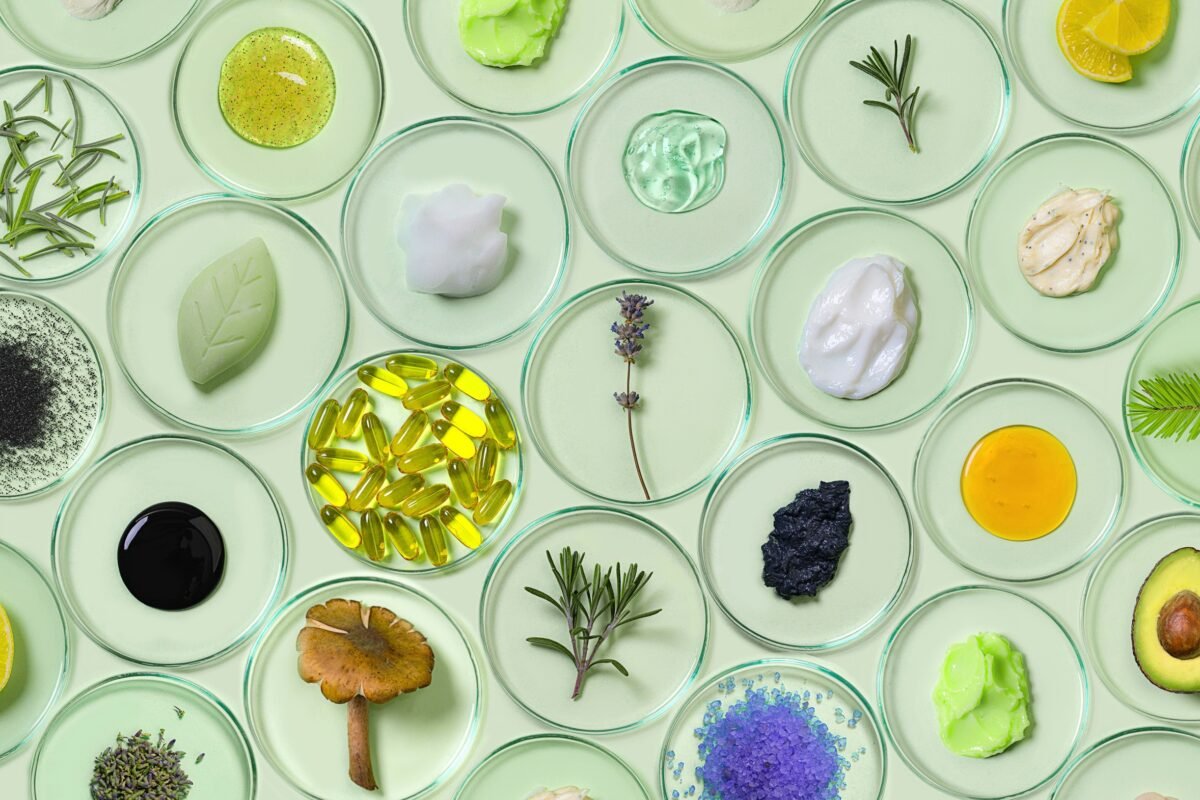


By making the following 9 practical lifestyle changes, including healthy nutrition, exercise, stress reduction, and sleep, you can strengthen your immune system. This increases your chances of staying healthy or becoming less ill after infection with, for example, the SARS-CoV-2 virus.
𝓲 Once you’re scrolling down, a top status bar will pop up to remind you of the article title and the reading time. The purple status bar all the way on the bottom of the screen shows your reading progress. Make sure you’ve tried our little Dark/Light background switch at bottom right (☼)! And on the bottom left, you can zoom text in or out for eye relief and reading comfort. Reading on a smartphone? Tilt landscape to find this function.
1. Macronutrients
Limit or avoid processed foods, especially sugars and starches. Consume unprocessed animal and plant foods containing essential amino acids and fatty acids (macronutrients), vitamins, minerals, and trace elements (micronutrients).
In general, limiting carbohydrate intake and consuming sufficient protein and healthy fats increases satiety. Fruits and vegetables are good, fiber-rich sources of carbohydrates. For protein (from both plants and animals), the recommendation is at least 1 gram per kg of body weight. Healthy fats consist of both unsaturated and saturated animal and plant fatty acids, which are richer in omega-3 fatty acids than omega-6 fatty acids. The latter is important for reducing inflammation.
2. Micronutrients
- Vitamin A is found in liver, fish, and butter, among other foods.
- Vitamin B is found in vegetables, nuts, and animal products; vitamin B12 is only found in animal products.
- Vitamin C is mainly found in citrus fruits, kiwi, berries, sauerkraut, kale, broccoli, cauliflower, Brussels sprouts, bell peppers, and leafy greens.
- Vitamin D is found in oily fish, liver, and egg yolks, but this is usually insufficient in winter. The largest amount of vitamin D is produced in the skin in summer.
- Vitamin E is found in seeds, nuts (almonds), avocados, and leafy greens.
- Vitamin K is found in green leafy vegetables (especially cabbage), but also in other vegetables, fruits, dairy products, and eggs.
- Zinc is found in meat, dairy products, eggs, and oysters, and omega-3 fatty acids in fish, flaxseed, and walnuts. Magnesium is found in fish, (green) leafy vegetables, legumes, avocados, nuts, seeds, and dark chocolate
- Selenium is found in nuts, fish, and eggs.
- Water is consumed through beverages like (green and herbal) tea, coffee (without milk or sugar) or homemade bone broth, preferably consumed between meals, not during them.
3. Eat less often
Limiting the number of meals and snacks per day, such as skipping breakfast occasionally, helps keep blood sugar and blood pressure low. Furthermore, longer fasts can trigger cleanup and recovery responses. Limiting the number of meals (1 to 3 per day) contributes to fat burning. The endogenous ketones released then have anti-inflammatory properties.
4. Don’t smoke and don’t drink too much alcohol.
Smoking is harmful to your health. Quitting smoking while eating a healthy diet reduces the risk of weight gain. Avoid drinking any alcohol at all. The benefits of alcohol outweigh the risks. Limit your alcohol consumption to no more than one glass of wine with dinner, on a maximum of five days a week. Beer (even non-alcoholic) is high in carbohydrates.
5. Get enough sleep
Sleep deprivation increases the risk of contracting a viral infection.10 Deep sleep, in particular, early in the night, has a beneficial effect on the immune system. Stop exposure to blue light from computers, televisions, or phones earlier in the evening.11 Try to eat your last meal before 8:00 PM and don’t eat again until bedtime. Go to bed on time and sleep at least seven to eight hours a night in a quiet, well-ventilated, cool, and dark bedroom. If possible, take a power nap (10-20 minutes) during the day.
6. Keep moving
An active lifestyle reduces the risk of a respiratory infection.12 Walk or cycle daily, preferably in nature.13 You can exercise at home with minimal equipment. Playing, dancing, or gardening at home has a positive effect!
7. Cherish sunlight
Sunlight does more than just promote vitamin D production in the skin. It stimulates the production of endorphins and neuropeptides, which create a pleasant feeling and suppress the need for sweets. However, beware of sunburn and avoid prolonged exposure to the bright midday sun in spring and summer.
8. Prevent stress and anxiety
Prolonged stress or anxiety increases cortisol and compromises the immune system.14+15 Avoid stress as much as possible and ensure sufficient relaxation. Yoga, meditation, and mindfulness are good ways to do this.16+17 Regular deep breaths, reading, laughing, or listening to music also work well. It helps you stay optimistic and grateful and maintain social connections.
9. Supplements
During a (potential) viral infection, micronutrients (vitamins, minerals, trace elements) and omega-3 fatty acids are underestimated for optimal immunity. Basic supplementation, such as a multivitamin and a fish or algae oil supplement, is worth considering (preferably without additives such as colors, flavors, and fragrances). During illness, supplements may be necessary due to increased needs and suboptimal nutritional intake. Vitamin C (1000–2000 mg per day, taken in divided doses), vitamin D (1000–3000 IU per day), zinc (15–30 mg per day), and selenium (100–200 micrograms per day) are now used worldwide for the treatment of viral infections.
About the authors
- Yvo Sijpkens, Medical Specialist Internal Diseases, Your Lifestyle As Medicine Foundation, The Netherlands
- Louisette Blikkenhorst, Ketogene Institute, The Netherlands
- Lieneke van de Griendt, General Practitioner, Author: “Did we study Physicial Health Sciences or Prescribing Medicine?”(NL), The Netherlands
Sources
This article was originally published in dutch here. It has been translated from dutch to english by CommonTruth.app. Some starting/finishing remarks have been left out from the original article – addressing the coronavirus epidemic at the time – to make it more accesible to the broader public. Through this editorial process, most source referals became less relevant or absolete. Some readers however may still want to know more about these sources, so here is the complete list used by the authors.
- Guan WJ, Ni ZY, Hu Y, et , Clinical Characteristics of Coronavirus Disease 2019 in China N Engl J Med. 2020;10.1056
- Fang L, Karakiulakis G, Roth , Are patients with hypertension and diabetes mellitus at increased risk for COVID-19 infection?; Lancet Respir Med. 2020;S2213
- Stefan N, Birkenfeld AL, Schulze MB, Ludwig Obesity and impaired metabolic health in patients with COVID-19. Nat Rev Endocrinol. 2020;1 2
- Noakes TD, Windt JEvidence that supports the prescription of low-carbohydrate high-fat diets: a narrative reviewBritish Journal of Sports Medicine 2017;51:133-139.
- DiNicolantonio JJ, O’Keefe JHImportance of maintaining a low omega–6/omega–3 ratio for reducing inflammationOpen Heart 2018;5:e000946. doi: 1136/openhrt-2018-000946
- So Yeon Kwon, Karen Massey, Mark A Watson, Tayab Hussain, Giacomo Volpe, Christopher D Buckley, Anna Nicolaou, Paul Badenhorst, Life Science Alliance Jan 2020, 3 (2) e201900356; DOI: 26508/lsa.201900356
- de Cabo R, Mattson , Effects of Intermittent Fasting on Health, Aging, and Disease. N Engl J Med. 2020 Jan 16;382(3):298
- de Cabo R, Mattson , Effects of Intermittent Fasting on Health, Aging, and Disease. N Engl J Med. 2020 Jan 16;382(3):298
- Kuda O, Martin Rossmeisl, Jan Kopecky, Omega-3 fatty acids and adipose tissue biology, Molecular Aspects of Medicine,Volume 64, 2018, 147-160
- Besedovsky L, Lange T, Haack The Sleep-Immune Crosstalk in Health and Disease. Physiol Rev. 2019;99(3):1325–1380
- Michal Šmotek, Eva Fárková, Denisa Manková, Jana Kopřivová, Evening and night exposure to screens of media devices and its association with subjectively perceived sleep: Should “light hygiene” be given more attention?, Sleep Health, 2020
- Martin SA, Pence BD, Woods Exercise and respiratory tract viral infections. Exerc Sport Sci Rev. 2009;37(4):157–164
- Djernis D, Lerstrup I, Poulsen D, Stigsdotter U, Dahlgaard J, O’Toole M. A Systematic Review and Meta-Analysis of Nature-Based Mindfulness: Effects of Moving Mindfulness Training into an Outdoor Natural Int J Environ Res Public Health. 2019;16(17):3202. Published 2019 Sep 2. doi:10.3390/ijerph16173202
- Morey JN, Boggero IA, Scott AB, Segerstrom Current Directions in Stress and Human Immune Function. Curr Opin Psychol. 2015;5:13–17
- Gouin, Jean-Philippe. Chronic Stress, Immune Dysregulation, and American Journal of Lifestyle Medicine 5, nr. 6 (1 november 2011): 476–85
- Goyal M, Singh S, Sibinga EMS, Gould NF, Rowland-Seymour A, Sharma R, et Meditation programs for psychological stress and well-being: A systematic review and meta-analysis. JAMA Intern Med. 2014 Mar 1;174(3):357
- Black DS, Slavich Mindfulness meditation and the immune system: a systematic review of randomized controlled trials. Ann N Y Acad Sci. 2016;1373(1):13 24. doi:10.1111/nyas.12998
- Carr AC, Maggini , Vitamin C and Immune Function.; Nutrients. 2017 Nov 3;9(11):1211
- Martineau Adrian R, Richard L Hooper, Peter Bergman, Davaasambuu Ganmaa, Emma C Goodall, Christopher J Griffiths, lkka Laaksi, David Mauge, Rachel Neale, Iwona Stelmach, Mitsuyoshi Urashima, Carlos A Camargo , Vitamin D supplementation to prevent acute respiratory tract infections: systematic review and meta-analysis of individual participant data; 2017. British medical Journal. 356
- Read SA, Obeid S, Ahlenstiel C, Ahlenstiel , The Role of Zinc in Antiviral Immunity.; Adv Nutr. 2019 Jul 1;10(4):696-710
- Guillin OM, Vindry C, Ohlmann T, Chavatte , Selenium, Selenoproteins and Viral Infection.; Nutrients. 2019 Sep 4;11(9):2101